

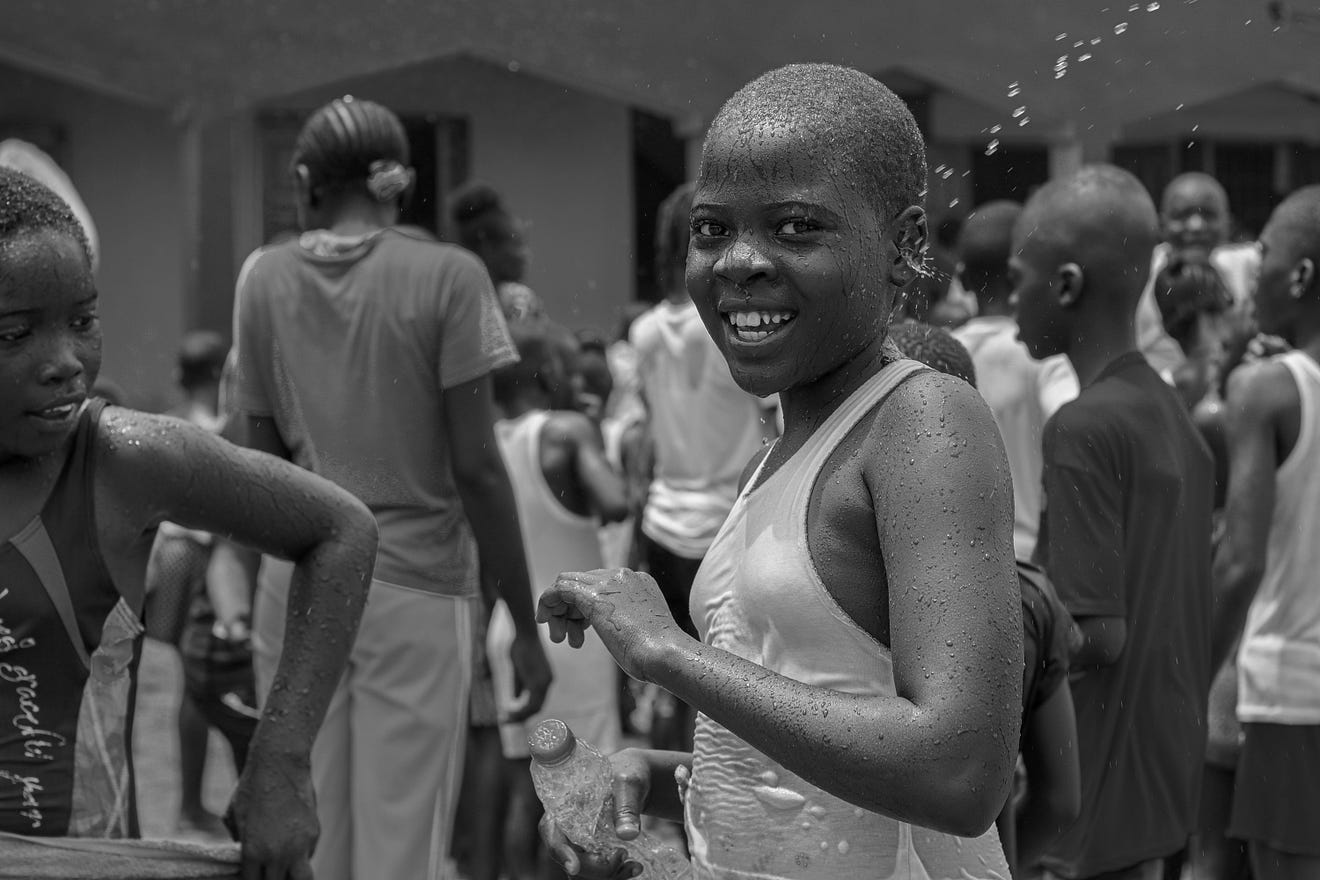
Hii ndo therapy ulikuwa una-need
— Nyashinski
I remember the first time I went for enta. My sweater was stolen earlier during the week. I was left with the sleeveless one. It was the best of times; it was the worst of times.
Wise words from my guardian when we were formally introduced were: Everything is communal. What he was essentially saying was that my sweater was not stolen; it was borrowed. That was my introduction to high school life.
Our enta nights were on Saturdays, from 6 pm to 10 pm. We had two halls. The bigger one was meant for those who preferred watching movies. The smaller one was for the music diehards. For the lovers of music, a small space is fitting, especially when you want the music to infect everyone. And infect it did.
The temperature difference was evident when you crossed the entrance, marked by doors ajar to music and man. Thick, warm, and heavy with a mix of testosterone and sweat, the atmosphere was distinguished. My forever-gone sleeveless sweater was not needed. Bravado filled the air, lighting the night with heat and promise. A good number of the men in that room were chair-bested (bare-chested), with sweaters either tightly tucked into their back pockets, wound into a fist around their wrist, or folded into a headwrap bun popular among the reggae icons.
Hands up for the real warrior! Real warrior! Real Warrior! Real Warrior!
Turbulence shook the ground. Only real warriors could sing to the anthem.
Music united the form 1s and the form 4s. The dance floor was the literal level playing field. A form 4 power 0 (that is, a form 1) could put a form 4 power 1 (that is, a form 4) to shame with his dancing skills, and the whole crowd could cheer him on. The form 4 could not feel offended, but observe with reverence.
Inside that small hall, all barriers were broken. Those from Nairobi (Nai boys) and those from the village could move to the same song. Gully Creepa, the popular hit back then, did not distinguish between the heavy and urban accents.
Notably, we did not need alcohol or any substance. Music made us lose control. It inebriated us, tune after tune. Riddims were the popular genre. Like the infamous beef between the USA’s East and West Coast, in Jamaica, it was between Vybz Kartel’s Portmore Empire and Mavado’s Gullyside. Inside that tiny hall, nobody sparked any beef with another.
Enta nights were so electric that some CU boys (Christian Union boys) would leave fellowship for a few minutes at the dancehall. Yes, CU boys. The question you should be asking at this point is: how powerful is music that it pulls characters who should be getting salvation from the Gospel?
The power of music
Ka una kana ushaambiwa ni vile tu hauskii
— Nyashinski
Enta, as I had earlier highlighted, came in two formats. Dancing (what we would call “ngoma”) and watching, which was basically music-themed films. Movies would end earlier than the music, so we had the pleasure of enjoying both sides of the divide. It was also where I was properly introduced to reggae, ragga and riddims.
Saturday evenings were a lollapalooza of delights. We would not have to wake up early on Sunday, because there was no Sunday morning prep. It was the modern equivalent of a weekend rest after a Friday night out. There was also nyagu (meat), where we would get a few pieces in our mixture of herbs (collard greens AKA sukuma wiki). It also meant the soup tasted differently, pleasurably so.
Enta rescued everyone from the high school struggles. Recall that I have already shared that my sweater was stolen. The food was crap. Initially. But when it’s the only thing between you and starvation, it somehow transforms into a delicacy. The 2% in chemistry and 8% in mathematics results; the whips that followed; the slashing; the destumping of tree stumps; the suspensions; the hunger (despite the meals); the painful reality that you will not be visited on visiting day; the censure you would get during academic day; the joint examinations; the pressure to think about your future; the pressure from home to avoid sports; the pressure at school to engage in sports; the pressure to attend an outing or funkie; the pressure to get a letter from your girls or boys school; the impatience of dropping subjects you don’t want to proceed with for your final two years; the morning, evening and weekend duties.
The pressure was too much. I am certain I have left out others.
Everyone looked forward to Enta. Music was the dose, and we were compliant with the medication. Nyashinski worded it perfectly:
Najua unasuffer kila time mi hupotea
Hii ndo therapy ulikuwa una-need
In ancient history, music was the solace of the community. It was prescribed by the wealthy and powerful. It was composed by the peasants and the lowly, but wound its way into palatial spaces. Music united everyone. Music could make you forget your troubles.
The transition from drought into the rain season was celebrated with music. Childbirth was laced with music. Marriage ceremonies were capped with music. Death was followed with music. Music has been the companion of man. Dog was not man’s best friend. It was music.
Orphic tales show how the gifted bard travelled to the underworld to rescue his wife with nothing but music as his guide and companion. The same music convinced Hades to release Orpheus’ wife. Music was powerful enough to raise the dead.
Shamanistic leaders of yore believed that their musical powers could do wonders. Empedocles, the presocratic philosopher, believed he could bring back the dead. Death was the final barrier that pinned everyone down. Music, however, was deemed powerful enough to defeat death.
And while current science shows that it’s impossible to reverse death, music has nevertheless shown remarkable effects where science has failed. Patients with Parkinsonism, for instance, suffer pill burdens necessary to reduce the tardive dyskinesia and ataxia. Music, surprisingly, takes away this symptom.
Additionally, the effects of stroke can rattle even the most resilient of soldiers. Today, you woke up with all your limbs functioning well; in the afternoon, you can’t speak, can’t lift one or both limbs on one side. Stroke is literally life-altering. You begin to appreciate the normal movements that we take for granted. That was what Jamie Foxx experienced one day.
In his acceptance speech for the Ultimate Icon Award, he confessed how songs by his daughter were key to his recovery.
Famous orchestra conductors have survived strokes, with the belief that music was partly responsible for the return to normalcy.
A paralyzed limb is no different from a functionally dead limb. Bringing it back to life is also synonymous with raising it from the dead. Music does bring back life.
Now, how do we notice music?
Music is evident when someone uses an instrument to create ordered sounds with a purpose. Your voice box can be used to create sounds with purpose. Talking, therefore, is music. In the same spectrum, with highly ordered sound are the usual pianos, keyboards, drums, saxophones, guitars, violins, among a slew of others. As with taste, some forms of music are preferred to others.
Once we accept this definition, we begin to see it in the medical field. Ultrasound harnesses the power of sound using an instrument to achieve a certain purpose. It is in the realm of music. And ultrasound has been used in medical treatment. A recent and powerful role is in the treatment of eye cataracts. The process is known as phacoemulsification.
Sound is also used in the breakdown of stones. Lithotripsy directs waves to achieve stone breakdown, no different from a youngster playing video games using laser guns. This idea oddly reminds me of one Yoshinobu Gakuganji, the principal of Kyoto Jujutsu High, who uses his red-coloured electric guitar in battle. Inside operating rooms, urologists harness similar energy to crack open stones.
The most recent and powerful example is in the curing of cancer. Recently approved by the FDA is the process of histotripsy, where ultrasound is used to remove cancerous tissue in the liver. The power of music can get sidelined when it has been potent from the days of yore.
When your life is a constant barrage of failure after failure, it’s easy to give up. It doesn’t feel like living. But the moment you cross that barrier, the temperature is enough to vasodilate any dead part of your body.
The essentiality of music in high school gets overlooked. A parallel between what happens in reality and in movies is essential to observe the potency of music.
All superhero movies and series have theme songs. All antihero movies have theme songs. When all seems lost, in the respective films, music is the only companion the heroes have. It forms that invisible extension, bringing the audience to the protagonist to lament with the hero.
The Nobel Laureate, Elias Canetti, has previously described the monumental role of lamenting. Christianity has grown to become a religious stronghold because of lamenting. Members lament the unjust death of a person whom they deem is without fault. The reason he was crucified was for their sins, without a just trial.
At such moments, a great MC knows when to include the right background song to cement the feeling of the hero. They use music to build the tempo of the scenes when they are pitted against an evil that, upon rational assessment, appears likely to win. Music makes such scenarios powerful. When you take away the music, the rescue missions are tepid.
In high school, this was evident when schools supported their teams. By the sidelines, you could hear songs such as:
Steam! Panda!
Steam Steam! Panda! Panda!Tension! Shuka!
Tension! Shuka! Shuka!
Before these teams got into the pitch, they could use different songs to warm up. There were times when we were woken up early in the morning, before the tournament games began, to warm up before breakfast. The last thing you want to do to a high schooler is to wake them up to perform exertive activities before breakfast. What used to get us into the mood was music.
Mama Milka! (Milka)
Milka Bonyo!(Bonyo)
Soldiers have music of their own. The matching is very rhythmic, where every step matches beats. Everyone wants to match the beat. But who thinks of these movements as rhythmic movement? Even if we dismiss this, soldiers still have songs to keep them going.
I don’t know what I’ve been told
You should have sung that.
In the same vein, enta night was the proper cocktail of music with the right measured dose to inject life into our lives. Small wonder we all reconnect fondly when we think of it.
I vividly recall my last Mass in high school. Finalists were given an hour earlier than the rest to go to the open-air market to purchase gifts which we would offer in church, knowing it would be our final one in that school. That morning, every Form 4 student joined the choir. It was glorious. Songs acquired a new form of vibrance. Everyone was dancing. The priest left the altar to join us. It was irresistible. To date, that was the best Mass I have ever attended.
Equally etched in memory is one Saturday morning, when we were doing a Geography joint exam while the rest of the school did the usual morning thorough cleaning. That is around 2 hours of squeezing answers when the rest of the world lounged, relatively speaking. From the back, one music enthusiast, whom I shared a name with, began making beats by drumming on his desk. We immediately recognized the tune. At the point when Vybz Kartel should have begun singing, our deputy school captain joined:
Mmmmh
Mmmh, Mmmmmh
Mi haffi tell you seh
Music was there with us during that pocket of a difficult time.
The effect is so powerful that we have tried to develop a version of it now that we’re adults. Every Friday is a mini-holiday. We long for Friday so much that Nonini and Nameless coined an anthem:
It is okay (okay),
Ni furahi-day
Friday has mutated into furahi-day. A day of fun. A day we long for. A day dense with music.
The song and the video show what people long to do. Reunite. Forget. Live a little. Strip away music, and that longing doesn’t make sense. It’s not that we wish to quickly get to the weekend; it’s that we want to enter the weekend accompanied by celebration and most importantly, music.
Adults can weather the drudgery of work life because of the weekend, because of furahi-day. High schoolers could keep up with the demands and pressures of being a high school student in a boarding institution because of music. Our high school experience shows that we don’t need booze to get high. Music does that already.
Sol Fest is one of the largest festivals in the region. Every year, it attracts the same cohort of individuals to perform the same songs. In all rationality, one cannot understand why someone would pay out of pocket to listen to music that can be readily accessed from several streaming platforms. We seek a uniting ground, where we can unleash the caged versions of our souls and sing our hearts out. By the time you leave Uhuru Gardens, you feel rejuvenated.
That’s the effect of music.
That is precisely why we started Funkie Fest. Like the music conductor, we take you through the journey of high school, but with the accompaniment of the most powerful tool ever invented — music. For nostalgia’s sake, we have divided our term into three: Term 1, 2, and 3. Our goal is to heal without the doctor’s prescription. We intend to infuse life back into your responsibility-laden days. When you walk into our space, you should forget that you’re the adult. Give yourself that chance. And let music guide you.
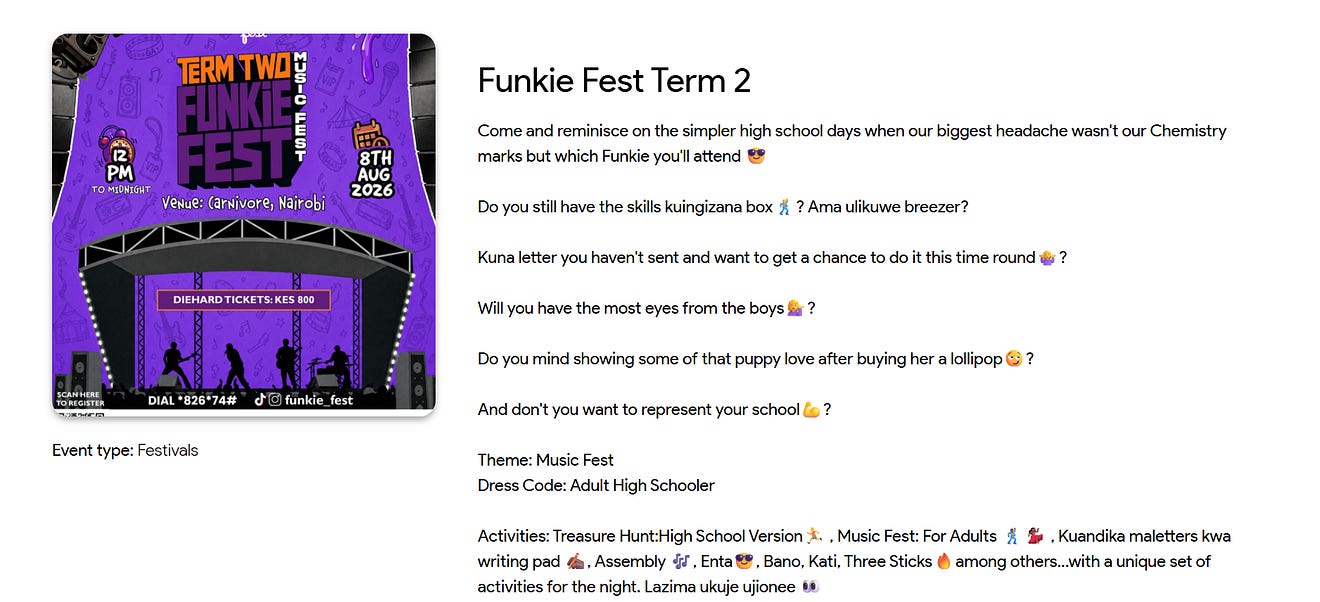
What I’m trying to say is…
We survived high school, thanks in part to music. We have a reason to celebrate it.
Sauti Sol and Khaligraph Jones wish that they could rewind the good old days. We took that seriously. We’re taking it back.
And yes, you guessed it. We have Enta Night sessions. Two in particular; two DJs who will take you back to your high school days; two of the last hours of Funkie Fest, Term 2, that you wouldn’t want to miss.
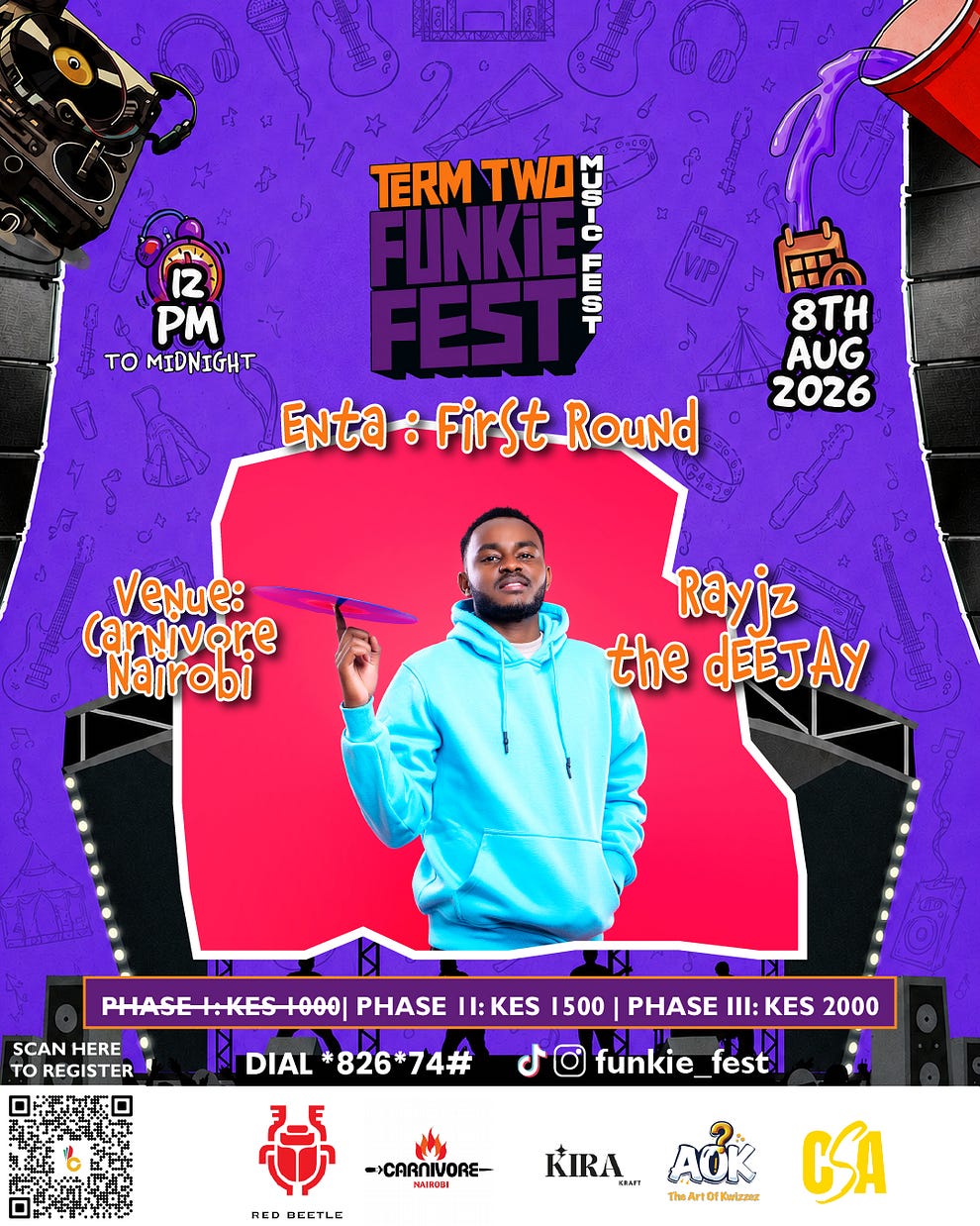
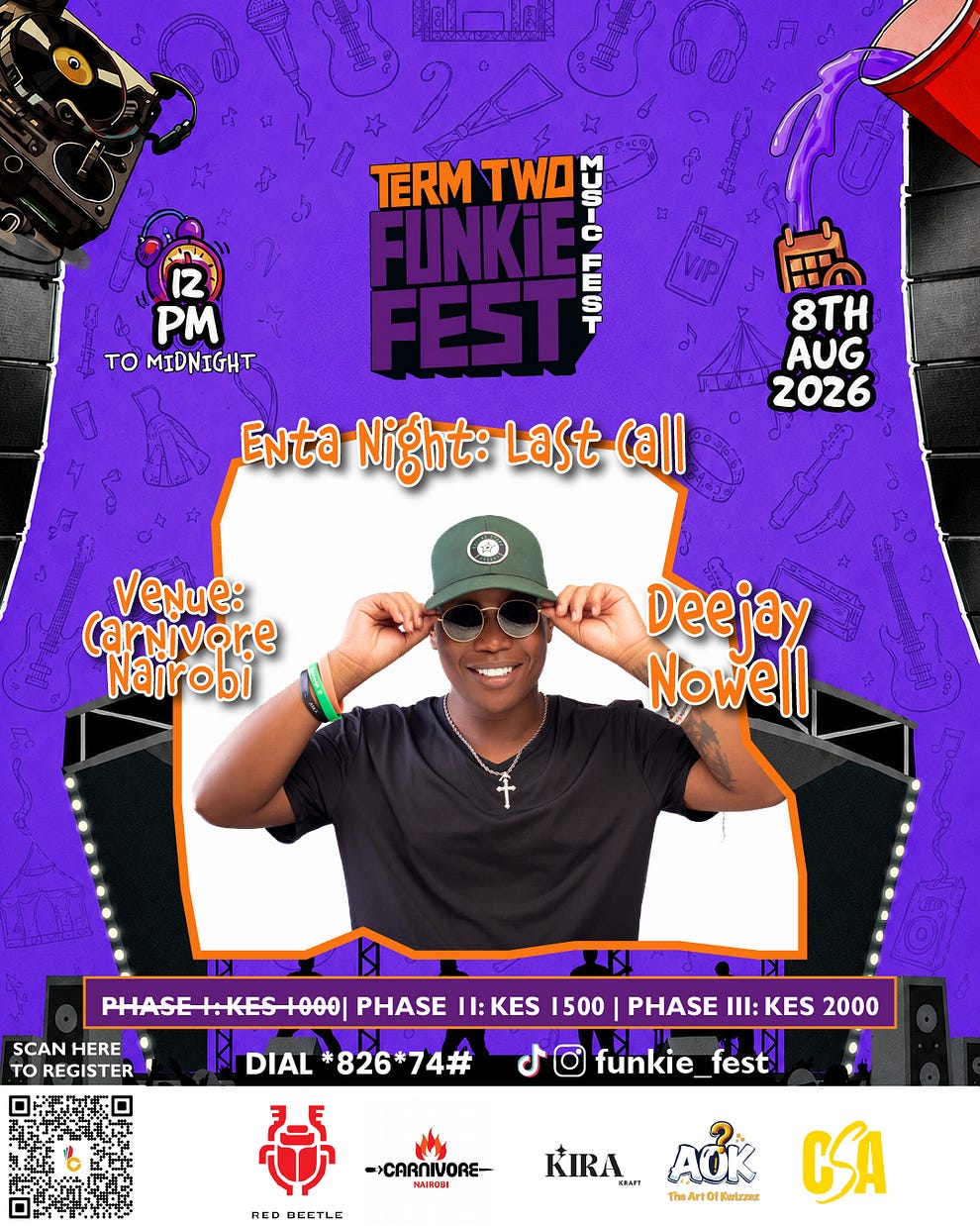
You can secure your tickets here. See you in Carnivore Simba Saloon on the 8th of August. Bring the best version of your high school self, because, in the words of Nyashinski, hii ndio therapy ulikuwa una-need.
*Enta — the Kenyan version of entertainment planned for boarding high schools
This song inspired some of the lines used in this article. Source — YouTube