

Let’s start by debunking a myth.
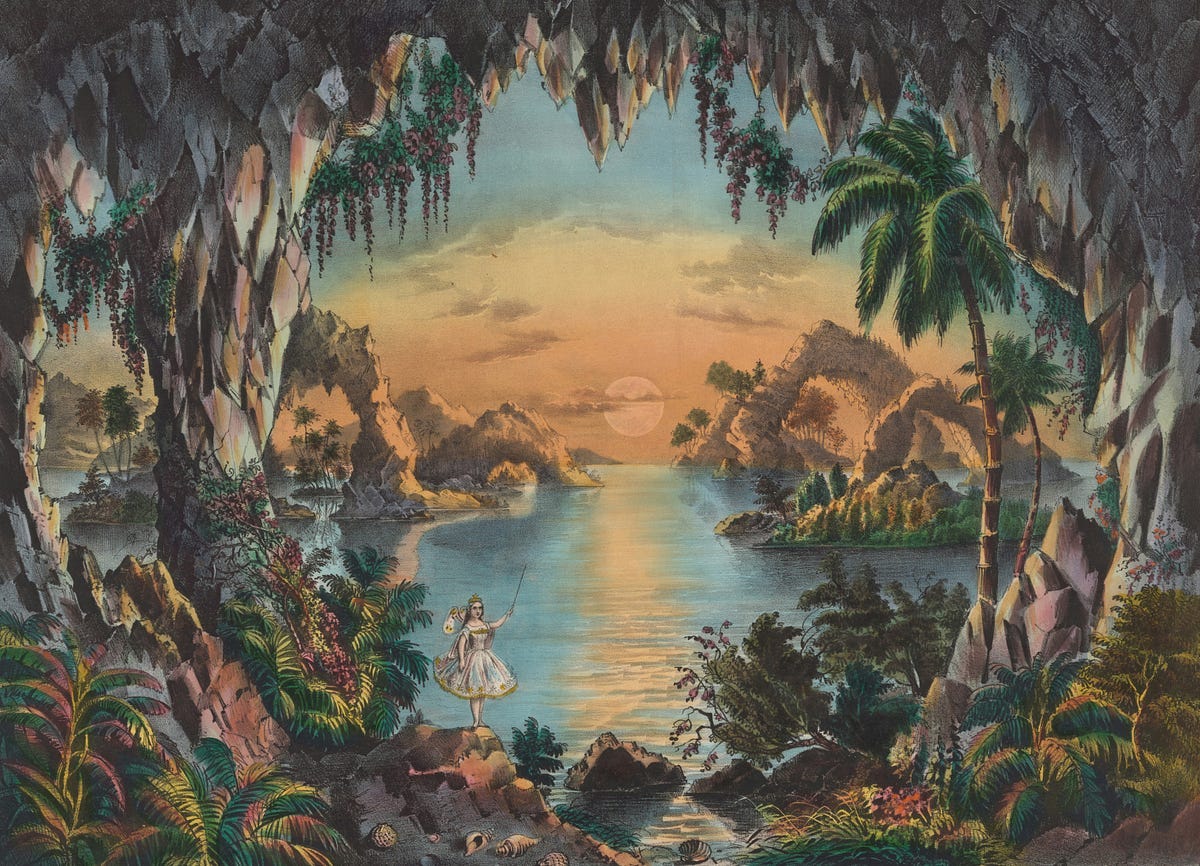
Science is art.
You have to be an iconoclast to stick with a theory people bash. Kepler recognized the mistake his mentor, Tycho Brahe, had made and refined his model. Artistically, he took a circle and stretched its sides. From circles, he created ellipses. He stuck with it until he was proven right.
Einstein imagined riding a beam of light. This beam did not follow straight lines. It bent in certain spaces. He rode this beam until he was proven right.
Darwin opposed the narrative of most religious stories. He even stood his ground against the best wishes of his family to become a medical doctor. Art can have that tug, pulling your heartstrings. Eventually, his theory stood the test of time.
Science is artistic because new paradigms hardly existed before. They are as new as the latest painting by your favourite artist. As fresh as the latest song by Clipse. As radiant as the newest technology.
And science follows a trend, like all art forms. I’ll give you the coarse-grained version through the story of evolution.
First comes the arrival of the fittest. It is not quite known, but once it is, everybody wants a piece of it. A fraction of organisms mimic it. Others want to copulate with it. Some prefer to admire it at a distance.
Soon, every corner of that niche is occupied by the traits once displayed by this organism. It is now the fittest and has survived throughout time. Survival of the fittest sees the emergence of a new species.
But for life to continue, there must be another episode of the arrival of the fittest. That’s the cycle. I’ll clarify it later. For now, let’s move on to another artistic space — music.
Live Music
Can we go back, this is the moment
Tonight is the night, we’ll fight till it's over
So we put our hands up, like the ceiling can’t hold us— Ray Dalton
I was ready to walk from Kasarani to Kenyatta National Hospital. Quite the distance. That’s how energized I was after witnessing the live performance of Marcus Miller at the Safaricom Jazz Fest.
I didn’t walk back to my room.
But when I finally arrived at my small nest, I sought out his performances, researched his accolades, and replayed his recorded, live concerts.
The recorded versions were great, but they could hardly match the level of energy that still rippled throughout my clothes. I wanted another performance. Despite never being a Jazz fan up to that day, thanks to his band, I looked forward to the next Jazz Fest.
I didn’t miss it.
A similar story explains my invitation to witness an excellent DJ. He goes by the name Mista C. After attending a meeting, my friends told me they were en route to dance the night away to Mista C’s mixes.
I didn’t get the name right. At first, I thought it was the gospel singer, Mister Seed. It sounded off. Playing gospel songs inside a club is not new, but bringing a gospel artist who may have questioned the intentions and goals of those who visit clubs, especially on a weekday, was suspect.
“Seamless transitions,” was Judy’s persistence.
I caved. Only because I like Judy’s taste in music. I didn’t regret it one bit.
By the time we were leaving, at around 6 am, Judy couldn’t stop praising him:
Huyo jamaa ata akisema yeye ni Express Way, nitamuamini!
The whole team, inside a single car, nodded in agreement. Mista C is, without a doubt, the best DJ in Kenya, and this is after all the club sessions we’ve chased with my friends. Sir M is the only other contender for that top spot.
Once, on the 31st of December, we gathered in Westlands, following the party where three top DJs in the country planned to usher in the new year.
Their mixes were unpredictable, as they should be. We left the following morning at 7:30 am, only because one of us wanted to get home early in preparation for Mass.
That night paled in comparison to the experience we had that Thursday night, with Mista C. Thursdays soon became a staple for hitting the Black Samurai, after confirming his attendance. Once, he planned a live performance with Mutoriah. It was electric.
The Mutoriah-Mista C performance at Black Samurai. Source - YouTube
The last time I attended another live performance was a three-man army of a concert. Mistac C on the decks, a saxophonist, and another on the keyboard. At one point, you could see the saxophonist turn and smile because the transition and pace Mista C was taking them was only akin to Kipyegon’s.
Where am I driving with this?
It’s about the trend in art.
The Trend
Simplified, it starts with an exciting explosion of an idea. This gets packaged and scaled. It then reverts to its live experience.
Let’s go back to science and finish with any form of art you can think of.
The first PCR machine was huge. Its announcement signaled the later emergence of a Nobel-worthy advancement in science. After its improvement, the technology became packaged into small bits. Now the machine is almost the size of a toaster. It has lost the lustre of the initial one. The scientific community seeks the next big leap in genomics and genetics.
At first, there was Einstein’s paper about general relativity. It shook the world. Over time, people packaged it and applied it in various fields, from mobile GPS to the launch of spacecraft. Now the world seeks another new idea.
Newton’s laws almost sank science into a complexity attractor of determinism. His laws were accurate down to the seventh decimal. It became packaged and spread all over the world, adjusted to incorporate his other invention, calculus. Now the world seeks a new mathematical invention.
In contrast, the other forms of art have another step, seen in other scientific platforms, but I’ll get back to this in a while.
It starts with a song by Whitney Houston. It then gets packaged into vinyls, CDs, USBs, folders, and Spotify playlists. But this drains the initial magic. The fans then crave a live performance. The live version is much more invigorating than the packaged one.
It begins with a little boy, left-footed and with the number 19 at the back of his jersey, on a mission to replicate what Diego Maradona did in 1978. These matches are recorded, packaged, and distributed all over the world. But the fans want to see him go all the way to the final and clinch the coveted World Cup Trophy. In December 2022, they did. There was never a World Cup final like that one.
J. Cole fans love his music, myself included. I was first introduced to his album, 4 Your Eyez Only, after my phone was stolen. A friend handed me his other phone, and I played the entire album. But as his fans would argue, nothing matches the Dreamville Fest, the live version of the Dreamville team.
Kendrick and Drake took over the hip-hop craze last year. All the hype was packed into less than 10-minute audio songs. The world loved it. But this energy could not match the hype of the City of Compton when Kendrick made the video version of the song that sealed the beef. His live concerts were sold out. The Super Bowl performance was crazy. The world loved it.
Taylor Swift made history as the first musician, solely through her music, to break the billion-dollar threshold. Why? It’s not largely because she packed her greatest hits into digital and streamable samples. It’s because the world craved live performances.
I pick music because it’s universal art.
Science, too, has its equivalents. The science fairs, where experiments are done in front of live audiences, get scientists and science enthusiasts excited. In contrast, they do not attract as wide an audience as the music industry.
As we booked a cab and headed straight for Black Samurai, Judy asked me to search for one of Mista C’s mixes on YouTube. It was ecstatic! The driver didn’t even care that our ride was dishonourably discounted. He enjoyed the company and the music. It, however, paled in comparison to the live version. There was a reason we left the venue early in the morning.
If you haven’t gotten it by now, let me spell it for you:
1. One live and/or big announcement.
2. Packaging and distribution into replicable options
3. Live and original preference
That’s the trend art takes.
Now, what happened when OpenAI converted every art form into Ghibli? The announcement was exciting. That was stage 1.
What followed next was the packaging and distribution. Since everyone has access to OpenAI, they converted their photos. Faster than anticipated, this later became bland. Boilerplate.
People then began craving the live preferences. Studio Ghibli continues to pump out its work, as its originality matches the live preference.
What does that mean for the automation promised by AI? It means that as an art form, it’s at the second stage. Soon, people will begin asking for the live and original versions.
Content. I’ve never loved that word. Whenever I tell some of my friends that I write, they are quick to tell me that I’m a content creator. Unfailingly, I insist that I am far from that simplistic adjective. I write. I would never want to package my unique art into a single word, indifferent from every other shared online.
I don’t produce content.
When they called it content, they hoped to package everything. They hope to pin art into that second stage. But art has a unique quality about it — beauty.
Beauty can never be packaged. Beauty can never be replicated. Beauty can never be commodified.
Beauty is rogue. Like the truth. And you can never package it. Science tried, but failed. Science’s method is based on falsification, not verification. Heck, we don’t even know what truth is. But we know its features. Beauty is one of them.
You can call it content. They have made pleasantly common for us to call it so. But it isn’t. Calling it content is an admission of the need for it to be packaged. It shouldn’t.
It should live freely. Authentically. Uniquely.
The growing need for live and original acts shows how billions and trillions can never put a cap on beauty. The authentic, real, and live versions have no ceilings.
A setting where we are bound to witness this is in the hospital. Assuming a health centre announces that it has automated most of its processes. That will be the second stage of art. But just as quickly, people will prefer the human touch. It’s original. It’s live. It’s reassuring.
Its value will also skyrocket.
The ticket price for a live performance is always more than the monthly subscription. Take any subscription you can think of. I recently subscribed to the New Yorker. I pay $4 per month. But I will pay close to $20 to get live and original insights from a favourite writer.
Sauti Sol’s songs are freely accessible on YouTube, but I am willing to pay for their annual Sol Fest tickets to witness the live event. Packaged performances don’t match the live version equivalent.
I can listen to Lauryn Hill the whole day, for free. But when I hear that she will be in Nairobi, I pay for the tickets, without a care about my monthly budget. That’s exactly what I did. And even though we had to wait until 3 am, we stayed for her. That might be the only Lauryn Hill performance I may witness.
I cried. Real tears down my calloused cheeks. I enjoyed Lauryn’s performance so much that I continue to sing her praises to date.
What does that also say about our obsession with recording everything? These are packaged tokens consumed by the public. If the trend is anything to go by, this will decline with time. Live versions will gain preference.
Funny enough, this final stage doesn’t have an ending to it. The masses will always prefer the live version. Some will even cough up an extra dollar to be in the VIP section.
Live streaming is always better than the recorded version. The 3D films feel almost real, and that’s why, despite the hits the theatres took post-COVID-19, they still have customers. These are ardent, card-carrying fans.
The packaged has never defeated the original. The original and authentic survive the crucible of time.
ASMR tones try. They can never compare to the original sounds. We crave the original. It’s why we try to package it. But since it never matches, we still crawl back to it.
What I’m trying to say is…
A call is more original than a text or a comment. A physical meet-up is more authentic than a Zoom call or Google Meet. A dramatic play by the Too Early for Birds cast is more appealing than a recorded version.
The tokenization of art tries to create a ceiling for the original creations.
But as Ryan Lewis sings, the original fights until it wins, and holds its hands up like the ceiling can’t hold it. Indeed, it can’t.
There appears to be a trend in art. The winners are the original. The authentic. The ones with taste.
During this AI craze, contrarians continue to insist that taste will win. The trend shows why.
Now that AI investment is in the billions, it also means the value of the original is about to skyrocket.
My advice?
Stay authentic.
This song inspired some of the lines used in this article. Source — YouTube