
Let’s Take a Long Walk
And not just because it’s a marathon and have to walk to the finish line

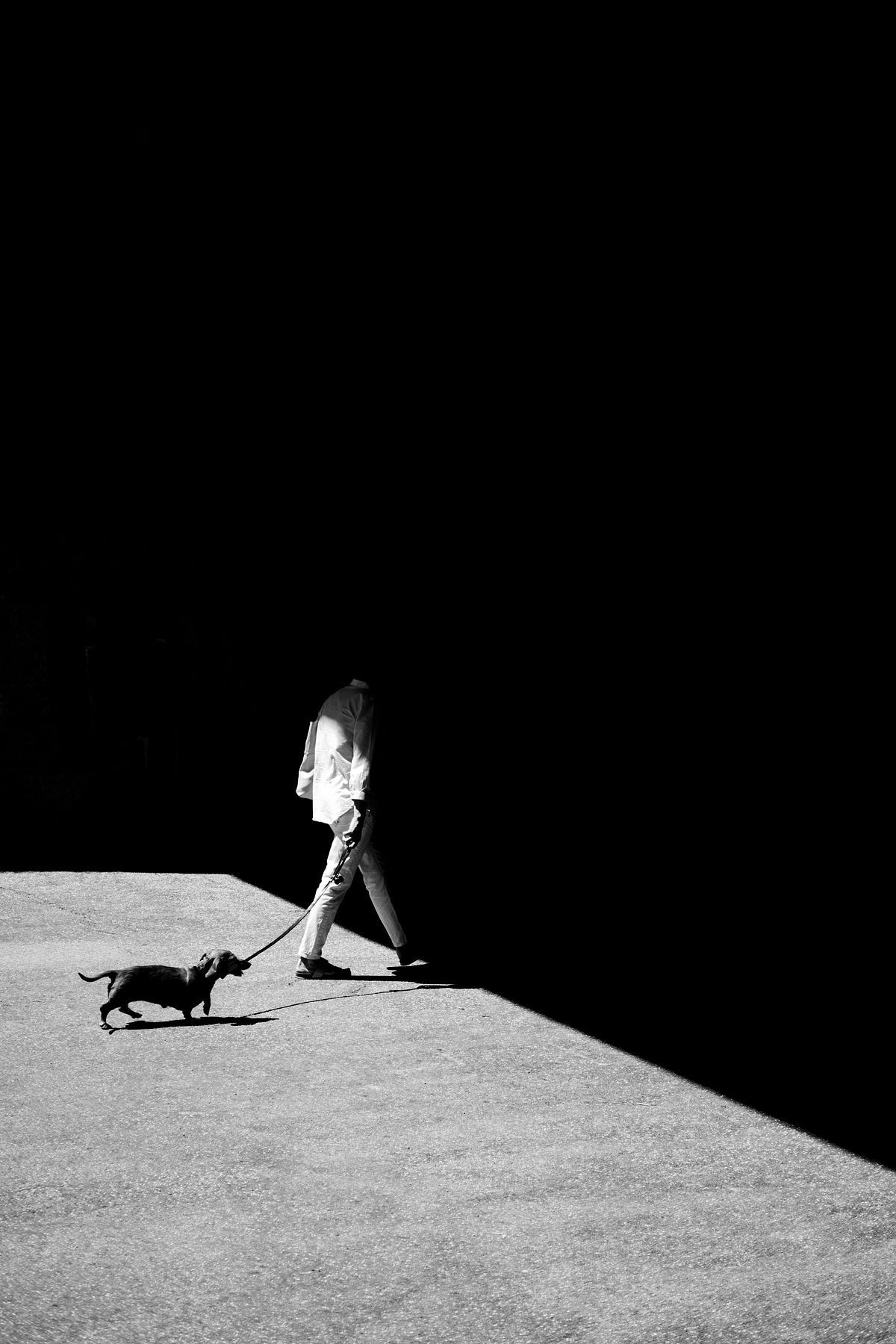
Among my friends, there’s a growing interest to participate in marathons.
It’s a healthy endeavour. I’ve seen some actively spare time and sacrifice sherehe time to prepare. I like that the idea can spark commitment.
Long walks are a different kettle of fish. There are no medals to be awarded at the end. No t-shirts to show that you participated in the long-distance movement. No celebratory performances and pictures to be taken at the end. No deadline for payments to participate. No new record time. No time to share on your status at the tail end, showing victory over the distance covered. No closed roads and a preceding memo or circular to warn other road users. Long walks are a different kettle of fish.
A long walk has the quality of a deeply engaging conversation with a curvilinear topography. You never know how you ended up in point B, and you don’t know at what point A began, but you don’t wish for it to stop just yet. When Jill Scott sings, “You’re here, I’m pleased, I really dig your company,” she relates it to the quality of long walks. Her chilled and unrushed demeanor, with a touch of her smooth, gentle, lulling voice, wants you to take the walk with her. I can listen to her sing the whole day and then repeat.
That’s the kind of long walk I would wish we all take, at the very least, once a month.
In what ways can humans take long walks, and why should we?
For various reasons. The most obvious is that walking is a healthy way of engaging your collective muscle groups. It’s the least of the reasons in my list.
Throughout history, great thinkers have encouraged walks. Ideas born from walks are powerful ideas, so much so that I believe what running does to the muscle, walking does to the brain. It also means the longer the walk, the deeper the effect. Somehow. If not deeper, then the more profound it is likely to be.
I like to take a 30–40 minute walk to a specific place to get my groundnuts. At work, I am known for my groundnuts. As much as my colleagues like to associate it with a particular group of people who stuff their mouths with greens and parrot their days away, they still would want to get samples, a taste, and then some more.
I have cooked up many ideas during these walks. Luckily for me, I share them often through writing.
I suppose the time I discovered the power of such walks was when I was in my final year in medical school. Before this time, I would occasionally walk from Chiromo, one end of Nairobi city, to Kenyatta National Hospital (KNH), another end, making the most of the fact that I never had a car nor wished to spend money on public transport. In truth, a lack of funds pushed me to consider taking my foot-subishi sometimes my i-shoe-zu for a spin.
On this particular evening, I noticed everyone who was walking was either on their phones or had locked out the open world using headphones or earphones. People were walking but in pseudo-zombie mode. I was one of them. So I removed my earphones, a modern artifact and signature I was known for in medical school. Immediately, I discovered the rich ambient sounds.
It was around dusk. On my right, young, energetic kindergarteners were engaging in an improvised soccer game, and surrounding them were trees that spectated in silence and approval. Birds sang their final phase of tunes before the night set in. A bridge separated the main tarmac road from this green paradise, and a river sloshed downstream. The sounds were a therapy I never knew I needed.
I soaked it all in.
There and then, I made a solid decision to never get earphones or headphones. I have kept my promise to date. If I were to listen to music, my other love, it would be through a big speaker. And that’s how I began appreciating the power of long walks.
By unplugging, the mind gets to swing. Like a play park, the sounds and ideas come from all around, and there’s no sense of a heavy, mental, damp blanket covering your mood. Through long walks, you actively participate in cultivating the mood you desire. This sensation is only felt when one unplugs. And that is one of the main reasons I suggest long walks.
Take the walk without earphones. Without headphones. Without earpods. You can let your brain sing a song, but don’t force a stream of songs onto your brain. And then observe. Let the sounds and experience simmer.
The simple effort of keeping your phone distant will be like the caged bird discovering its metal bars are not that narrowly spaced. They are wide enough to step out. The richness of life manifests before you.
In one of my walks, I noticed ducks standing on one leg and began to ask why. I have that tendency, to often ask why. I stopped for a few minutes, bent over, squatted, and could hardly see the other leg. I wondered how such a mature waterbird could have grown to such a size without another leg. There must be something I was not seeing.
On the other side, a man saw my puzzled look, smiled, and told me:
Zinakuwanga hivyo. Miguu zote ziko.
I looked at him and smiled in wonder. I later researched why birds stand on one foot while hiding the other. The long walk always has something to give. Plus, I discovered the people nearby can be friendly. You can hear Jill Scott beam as she sings in approval:
Lord, have mercy on me, I was blind, now I can see
That is a long walk done by oneself. But can you have a long walk with someone else? Indeed. I love such walks with my lady.
I have also discovered you can have such a walk while seated. A book is an invitation by the author to go for a long walk to a time not bound by the constraints of physics.
These walks encourage conversation. They engage. They are not interested in how many people saw your post and how many likes you get. It has no notification. It’s conversations throughout the journey. It’s why I like how Jill Scott continues after beckoning for the long walk:
Find a spot for us to spark
Conversation, verbal elation, stimulation
Share our situation, temptation, education, relaxation
I once had such a lengthy walk with Karl Popper in 2017. I was done reading Nassim Taleb’s Antifragile. He frequently referenced Popper’s name in his book. So I picked the first one, An Open Society and Its Enemies. It was divided into three parts: a lengthy walk.
But as good walks tend to go, you hardly notice you’re growing tired. On the contrary, you feel refreshed. I had to look up Popper to confirm if indeed he was a philosopher. The untrained mind believes philosophy to be riddled with abstruse words and mind-numbing jargon. I found Popper to be lucid and simple in his word selection, but with an incomparable, cogent thought process.
At some point, he came after what I believed in. I had to read the passage again. I stood up, shocked, then took a long walk to think about what I had just read. The mental walk had sparked a physical one. By the time I came back, I yielded — Popper had a point.
I believe a long walk can be anything that unplugs you from the virtual world. There must be a plot, an energy field that transfers you from one station to the next. Like chakras. A physical and mental connection of dots. Not an infinite scroll from one post that makes you laugh to another that shocks you in horror, with no idea of when it will end. This all takes place in a fraction of a second. These are not walks.
Recall that a walk does to the mind what running does to the muscle. That’s the clue to other ways you can take walks and why we should take several of them. A book can do just that, as can an essay. Jill Scott offers other examples:
Or maybe we can see a movie
Or maybe we can see a play on Saturday
Or maybe we can roll a tree and feel the breeze
And listen to a symphony
Or maybe chill and just be, or maybe
Maybe we can take a cruise and listen to The Roots
Or maybe eat some passionfruit
Or maybe cry to the blues
Or maybe we could just be silent
Come on, come on
Yes, come on!
Let’s take a long walk.
What I’m trying to say is…
Let’s go outside. Physically. Or we can go outside. A page at a time. Or we could sit in silence.
As the video unfurls, you can see how the colour begins to show from an initial black and white background. Jill Scott was onto something when she sang her classic. And I took it personally. So I’ll let her finish this up, and I hope you take it personally:
Let’s take a long walk around the park after dark
Find a spot for us to spark
Conversation, verbal elation, stimulation
Share our situations, temptations, education, relaxation
This song inspired some of the lines used in this article. Source — YouTube