

To get there, we run, we fly, we drive
’Cause with my family, we know where home is
So instead of sending flowers, we the roses
— Kanye West
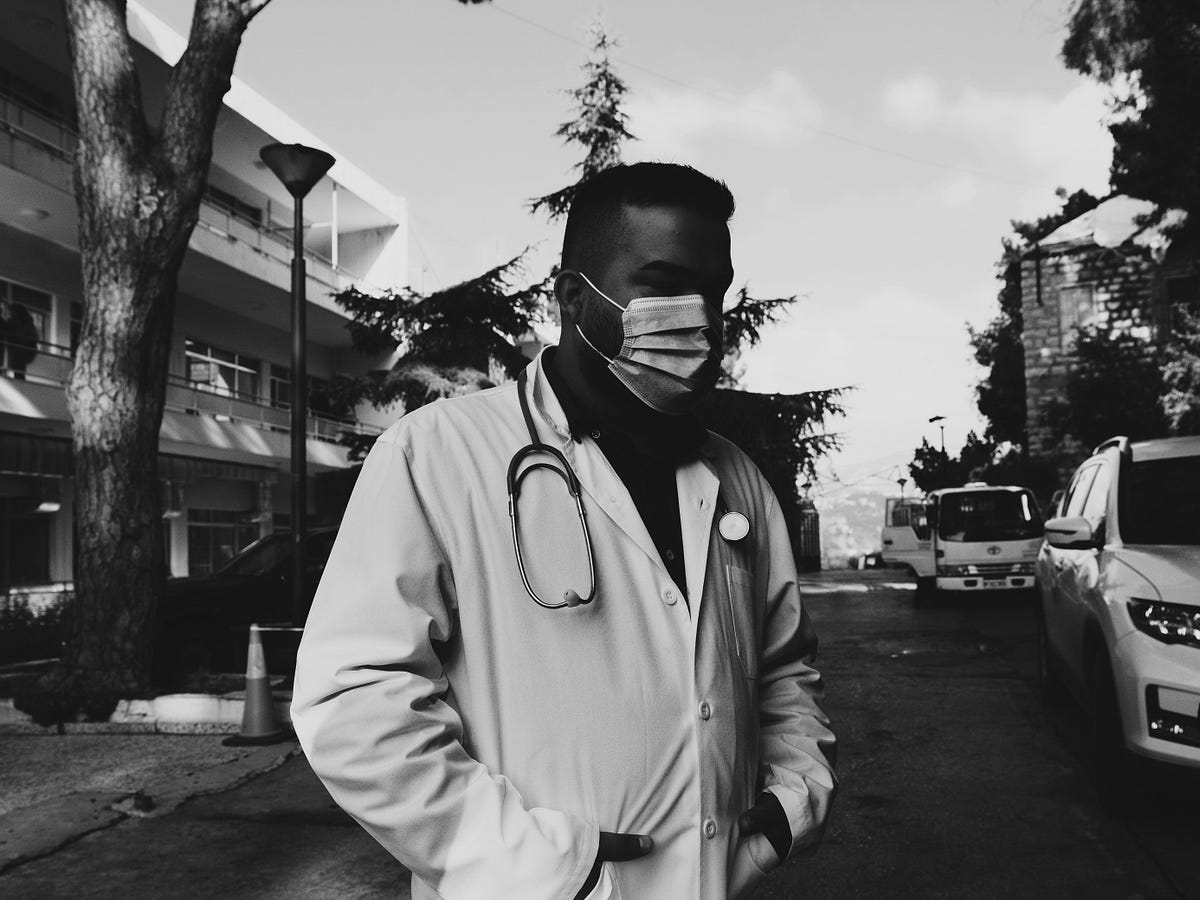
I particularly refer to patients who look like they would make it out of the ICU, only for the tide to take a turn for the worse. Their breaths may become air when life escapes them, but they leave tough residues inside our memories that we cannot easily shake off. A question that strings all these patients together that a clinician may ask is:
What else could we have done?
It was the same question I asked myself the night we received a patient I could hardly neatly classify or stratify. He was not a native Kenyan. His facial features hinted that Asia could have been his continent of birth. Communication was an issue. Fortunately, his close company understood basic English and gave us the patient’s history.
He visited several health care centres to curb what was now the reason for his admission into the HDU — complicated malaria.
My people back home are not unfamiliar with the disease. I was once admitted with severe malaria, and slept for over 24 hours, enduring the kind of suffering I cannot wish for anyone. The much I would want is for people to have at least a mild version of the disease, and then recover. These kinds of adversity build bodies and character, and shape individuals to be more empathetic of those who suffer the extreme version of the same malady, as was the case for this patient whom we had received.
He had visible episodes of confusion. Was on oxygen via prongs. His chest was heavy with fluid. His blood showed a leaning towards the acidic side of the pH scale. His urine had a deep, dark flow, in keeping with the complications of severe malaria. He had already received the first two doses of artesunate, the antimalarial, and was due for the third one within the first 24 hours when he was admitted to our facility.
A review of his labs worsened the already sad picture. His kidney results were extremely deranged. His infectious markers were off the roof. A repeat blood gas analysis showed severe acidosis. He needed support on multiple levels.
First, respiratory. I anticipated ventilatory support. We would eventually have to rescue the airway. Second, his blood pressure was low; he needed pressure support. Thirdly, to clear his kidney insults, he needed dialysis — renal support. He also required neurological support, since he was confused, at some point violent, far from familiar faces or a group that understood him. Recall that he was from another continent.
We were methodical in ticking off each of these systems — from explaining to the documented next of kin to obtaining consent for certain procedures — when the patient collapsed on us. I had already fixed a central line and had started the pressure support (ionotropic infusion). We had switched to a high-flow oxygen delivery system since he was still with us, which somewhat alleviated his respiratory effort. We had also wanted to dry him up by stimulating his urinary outflow. Then the wrecking ball came down.
After the collective team effort of tirelessly resuscitation, we called it. But as we ungloved, I kept asking myself — what else could we have done?
One of the nurses soothed my puzzled mind by affirming that we did everything we could. But I was not satisfied. We moved fast, we had help, everything was proceeding well, as planned. What could we have missed?
As I had said before, I never wish for anyone to suffer the vagaries of severe malaria, especially people who have never experienced its malignant effects. So I kept wondering, if the effects had gone all the way to the brain, coupled with the deranged kidney functions, could familiar faces have helped the patient? Would he have been calmer? At some point, he was violent with the very people who were helping him. Could the ICU have tipped him into confusion that fast?
Indeed, we worked with all the drugs and hands we had. At some point, after intubating the patient, the blood oxygen levels were at 100%. The heart was the one that proved elusive. We did all that we could to jumpstart it back to life, but it gave way.
What else could we have done?
I then began to wonder— how can we better serve patients who are critically ill but with language barriers? Can we have a criterion or a way to include familiar faces early on and up close until we have settled the patient comfortably, before they leave their loved ones? Bear in mind that this was minutes away from midnight. After eyeballing the patient, we reassured the family that their loved one was in good hands. But these words haunted us, because we had to call them back. At the back of my mind, I kept on asking:
What else could we have done?
I ran the scene in replay, inspecting every intervention. The blood gas analysis. The rapid sequence intubation. The ionotropic support. The diuretic infusion. The oxygen supply. The central line insertion. The baseline labs. The consent for procedures.
What confused me even more was that malaria is readily treatable. The disease, however, lingers within our borders. Egypt was recently declared malaria-free. Can my country strive to achieve such a state so that we don’t admit patients with these conditions?
By handling the malarial infection, the patient can get better. All the deranged results could decay into normalcy. But at what point does the lever tip to the point of no return? We have no lab test that confirms this while the patient is still with us. So it often leaves me with the question — what else could we have done?
The second victim
They outside of the emergency room, room
You can feel my heartbeat, beat, beat
If she gon’ pull through, we gon’ find out soon
But right now, she ‘sleep, sleep, sleep
My momma say they say she could pass away any day
Hey, chick, what these doctors know anyway?— Kanye West
Indeed, what do we know anyway?
While that recurring question lingered at the back of my mind, I noticed the nurses were scattered. Some were helping to clear the bedspace, while others were nowhere to be seen. The death had affected everyone in different degrees.
We had to seek each other out and console one another. Bearing the burden by oneself, locked up, can be crushing. This is what the second victim has to endure.
The second victim is the clinician who is often forgotten during clinical casualties. The deceased and the family have to be the first group that we reach out to and console for their loss. All the while, the clinician has to shift their mindset and get back to attending to the other patients as if nothing happened. Getting consumed by the loss of one patient denies the living ones better care.
A busy unit can demoralize anyone from continuing the management they are mandated to give to the other patients. Alternatively, a busy day could buffer clinicians from feeling the full effects of a lost patient, which descends like a heavy downpour once they have left the facility. That may be worse than handling it immediately, because there is no knowing how the second victim will get home, if they will get adequate social support, or a shoulder to lean on.
The kind of patients who leave us in such quandaries are the ones who evoke the false confidence that they can be saved. Budding with life, energetic enough to kick the nurses, and with good vitals. Their lab tests can be corrected once the treatment is begun, or sometimes are usually all within the normal range. Then the Grim Reaper swings his axe. A code blue is signaled. Everyone grasps to save what initially looked soluble.
In retrospect, it could be false confidence after the patient passes. Then again, a normal trend of vitals means the patient could indeed have been salvaged from the jaws of death. These tittle-tattle with oneself makes one wonder if indeed you can know up-front which patients will dip from those who will make it out of that abysmal valley.
These soliloquies mould, in real time, an individual with a temporary split brain: on one side, a clinician, and on the other, a worried human. When utterly shocked, the worried human holds the reins. The clinician is often pulled from their reverie by the team lead, if they are bold enough to recall each member to act on their assigned role.
What’s worse than having a team of hands helping out is a team of hands with split focus. The second victim begins to suffer long before the patient pulls the plug. The effects can linger for a while. And forgive me, because I had begun this paragraph with the phrase “what’s worse,” because there are worse situations.
For instance, when a patient passes on, regardless of that question which I kept asking myself, you will still feel like there was something you could have done. The team might be perfect. Well equipped. Experienced. Every intervention properly coordinated. And yet, when we lose a patient, we still feel like there is something we could have done. We sometimes feel that there is something we have done wrong. Few ever stop to think what we could NOT have done. This last part is hardly ever an option worth contemplation.
Patients are like the famous Schrodinger’s Cat, in hyperpositioned states. Especially the critical ones. An intervention is synonymous with opening that door. It will reveal if the patient is alive or dead. This is in keeping with the Copenhagen interpretation. Everett’s interpretation, however, ties the intervenors to the universes as they branch out. This latter version is aligned with the second victim.
Since this universe is irreversible, it seems the question I have been asking myself may be irrelevant with respect to the patient, but also any other patient, such as this one. Humans are not like machines. The genome is not a blueprint. A computer can be switched on or off. An organism cannot. There is no call center to help when stuck. So the question that persistently clouds our puzzled minds usually lurks:
What else could we have done?
What I’m trying to say is…
These cases are hardly ever featured in the public domain, but haunt clinicians. This is what they had signed up for. Maybe, if the discussions became more frequent and open, then we could have preset solutions for such patients and the clinicians (the second victims).
Until these conversations happen, we cannot conclusively say that we’re in irredeemable positions as critical care medical practitioners. We need to take that question and ask it more often and more loudly:
What else could we have done?
This song inspired some of the lines used in this article. Source — YouTube